Industrial Beneficiation Architecture & Flowsheets

Pioneering mechanical, hydraulic, and magnetic separation technology deployed to upgrade sub-grade Run of Mine (ROM) ores into high-value blast furnace and pellet feedstocks.

Why Advanced Beneficiation
Is Crucial For Steelmaking

Historically, direct shipping ore (DSO) with 60%–63% Fe was abundant. As high-grade deposits across Karnataka undergo continuous depletion, massive volumes of low-grade Run of Mine (ROM) ores are extracted at high altitudes. These sub-grade ores contain high proportions of unwanted gangue minerals: Silica (SiO2), Alumina (Al2O3), Phosphorus (P), and high Loss on Ignition (LOI).

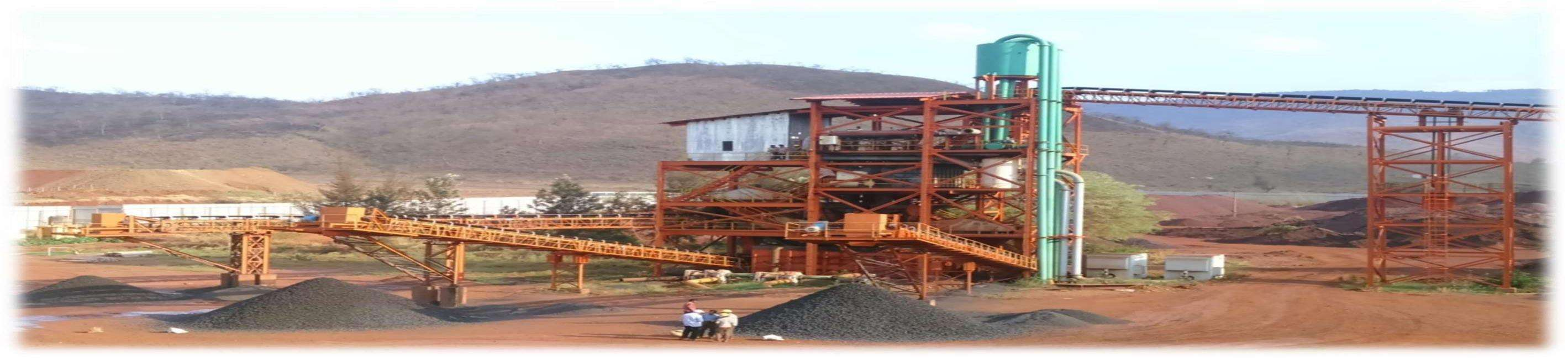
At our Nandihalli plant in Sandur, Beneficiation systematically eliminates impurities and physical contamination. Through attrition scrubbing, gravity sizing, pulsed jigging, hydrocyclones, and high intensity magnetic separation, we upgrade sub-grade ores into prime commercial feedstocks while preventing severe regional environmental hazards.
Blast Furnace & Sponge Iron
Requires low alumina, high Tumbler Index, and tight lump sizing (-40+10mm).
Pelletization & Sintering
Demands ultra-pure 64% Fe fines (<0.150mm) with minimal silica gangue.
Multi Deck Wet Screening Machine
Triple-Deck High-Pressure Wet Screening Circuit
Simultaneous isolation of 20-40mm, 10-20mm, and -5mm slimes

Three Pillars of VFSPL Processing Architecture

A synergistic integration of primary washing, Bateman jigging, and multi-stage slimes magnetic separation.

1. Washing & Crushing Plant

Mined raw ore is fed across heavy vibrating grizzly bars into Primary and Secondary Jaw Crushers. Care is taken to minimize generation of sub-0.150mm particles while reducing all ore below 40mm.

  • Wet Drum Rotating Scrubber: Hydraulic tumbling removes adhered laterite and limonite clays.
  • Triple-Deck Wet Screen: Top deck 40mm, middle 20mm, bottom 5mm with high pressure hydro-wash nozzles.
  • Gravity Screw Classifier: Separates -5mm+0.150mm product directly onto tripper storage conveyors.

2. Bateman Jigging Plant (Lumps)

Engineered and installed with technical expertise from world pioneers BATEMAN ENGINEERING. Designed specifically to beneficiate 10mm to 40mm low-grade lumps.

  • Pulsed Stratification: Separates heavy iron-rich particles from lighter silica gangue using water pulsations.
  • Tri-Product Output: Yields high-purity concentrate lumps, middlings for blending, and clean rejects.
  • 20-40mm & 10-20mm: Tailored directly for Blast Furnaces and DRI Sponge Iron kilns.

3. Fines Beneficiation & HIMS

Treats fine ore particles below 0.150 mm (minus 100 mesh) with 30%–35% solid slurry concentration across multi-stage magnetic and gravity circuits.

  • Hydrocyclones: High-g centrifugal classification down to 20 micron cuts.
  • High Intensity Magnetic Separators: 1.2 Tesla magnets recover paramagnetic hematite concentrates.
  • Gravity Spirals: Treats non-mags to maximize recovery into 64% Fe pellet-grade fines.

Official Plant Schematics & Circuit Flowsheets

Click on any diagram below to inspect the full high-resolution engineering blueprint in full-screen view.

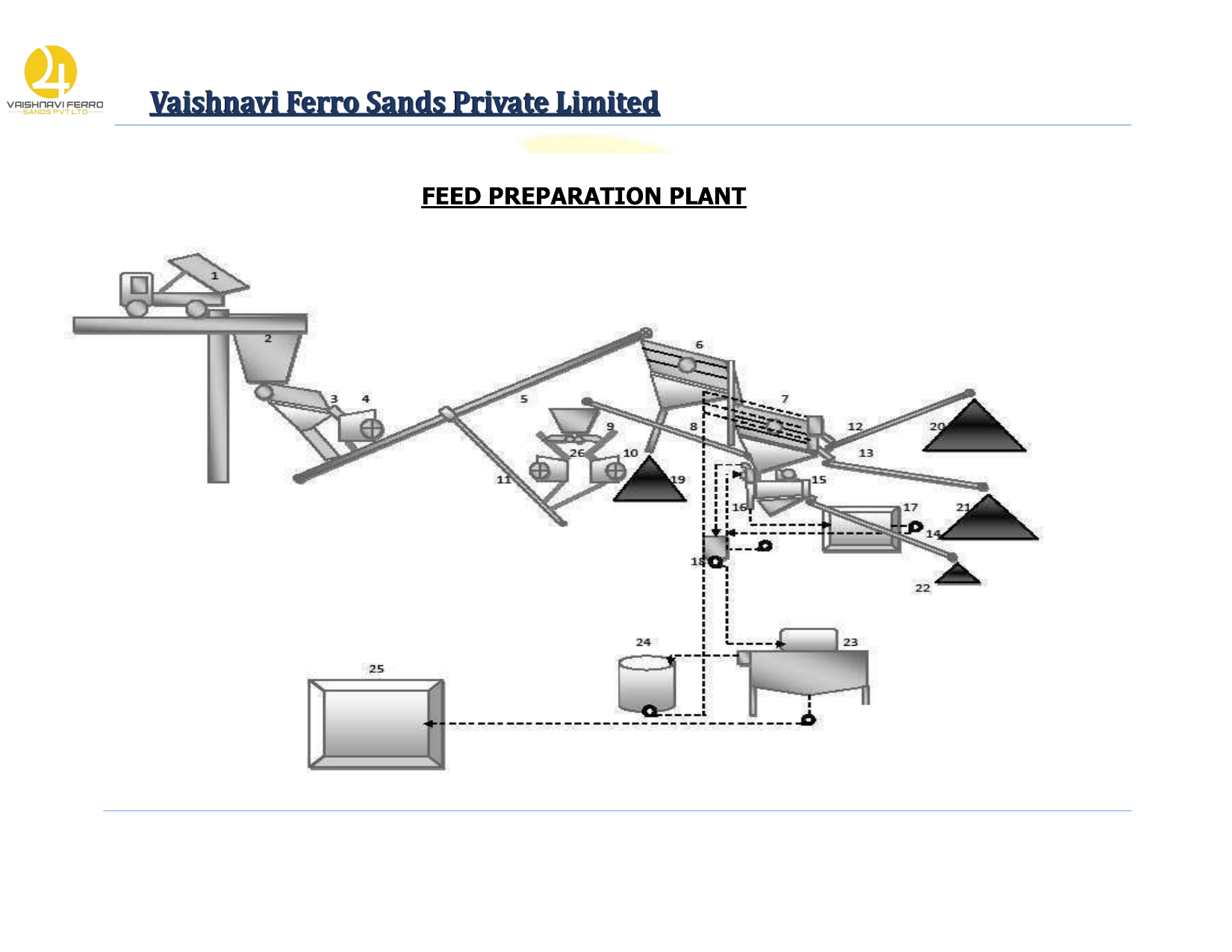
Feed Preparation Plant Schematic

26-stage mechanical sequence: Hopper • Grizzly Feeder • Primary Jaw • Secondary Triple-Deck Screens • Hydrocyclones • Thickener.

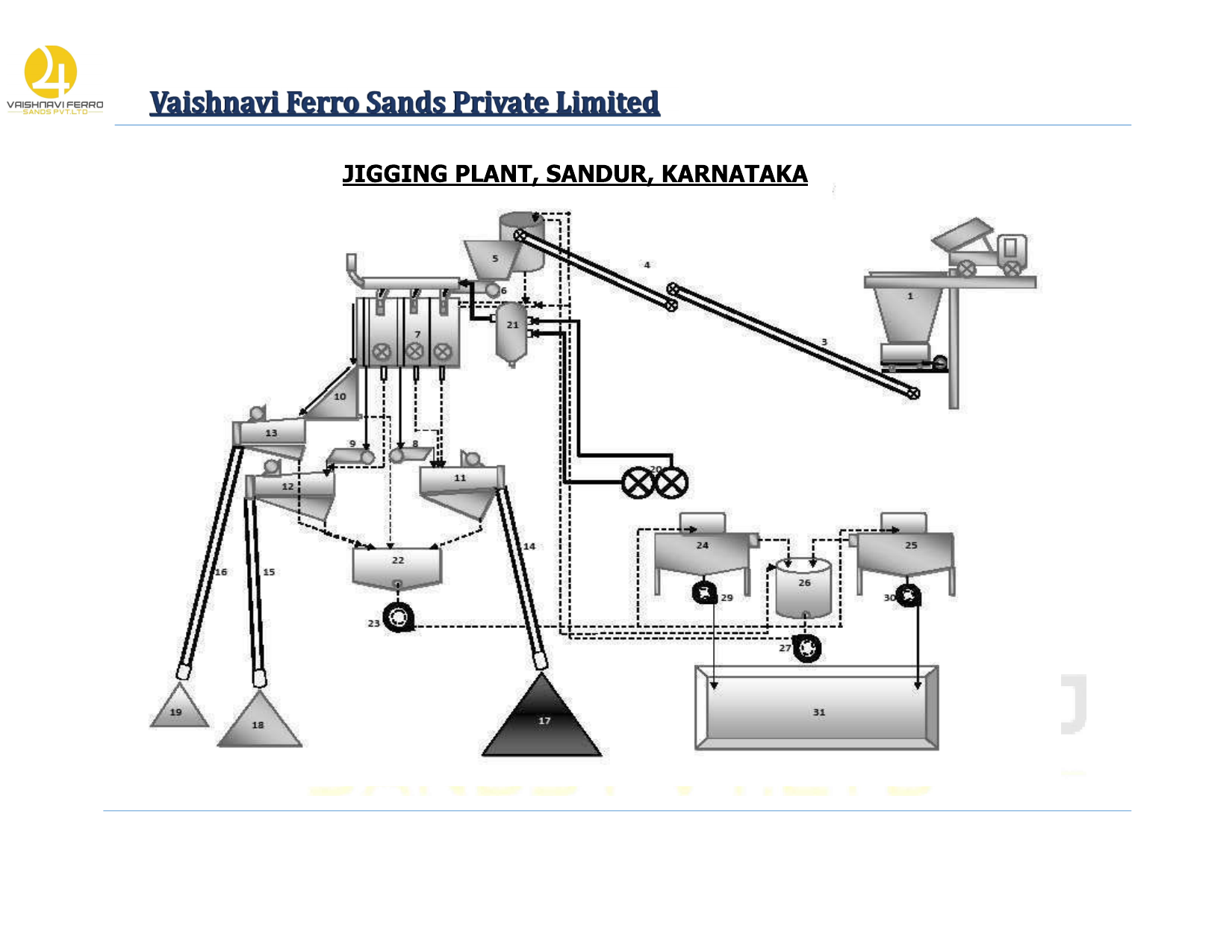
Bateman Jigging Plant Schematic

31-point schematic: APIC Jig • Concentrate Dewatering • Air Blowers • Process Water Clarification • Stockpile Conveyors.

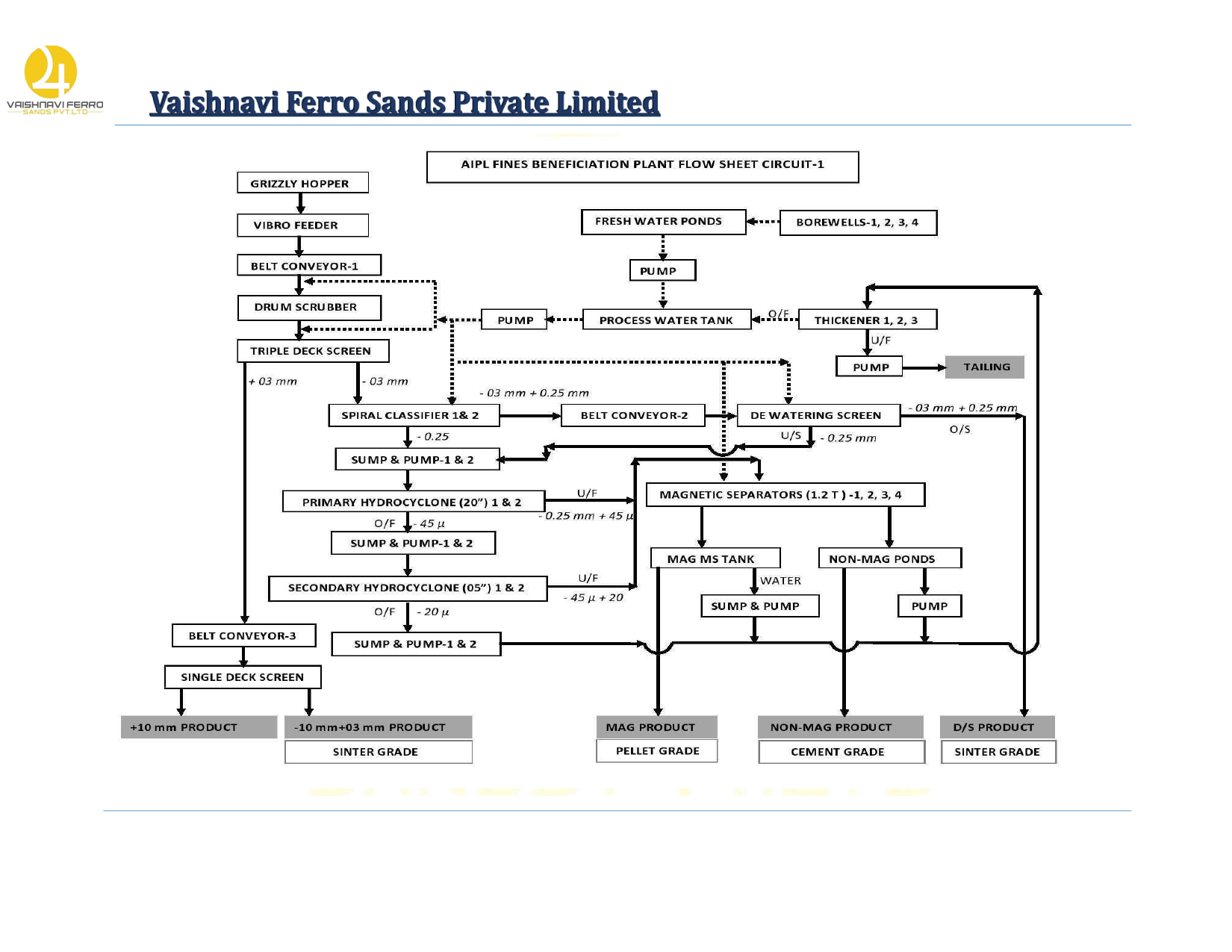
Fines Beneficiation Flow Sheet (Circuit-1)

Integration of Spiral Classifiers • 20" & 05" Hydrocyclones • 1.2 Tesla Magnetic Separators • Pellet & Sinter grade outputs.

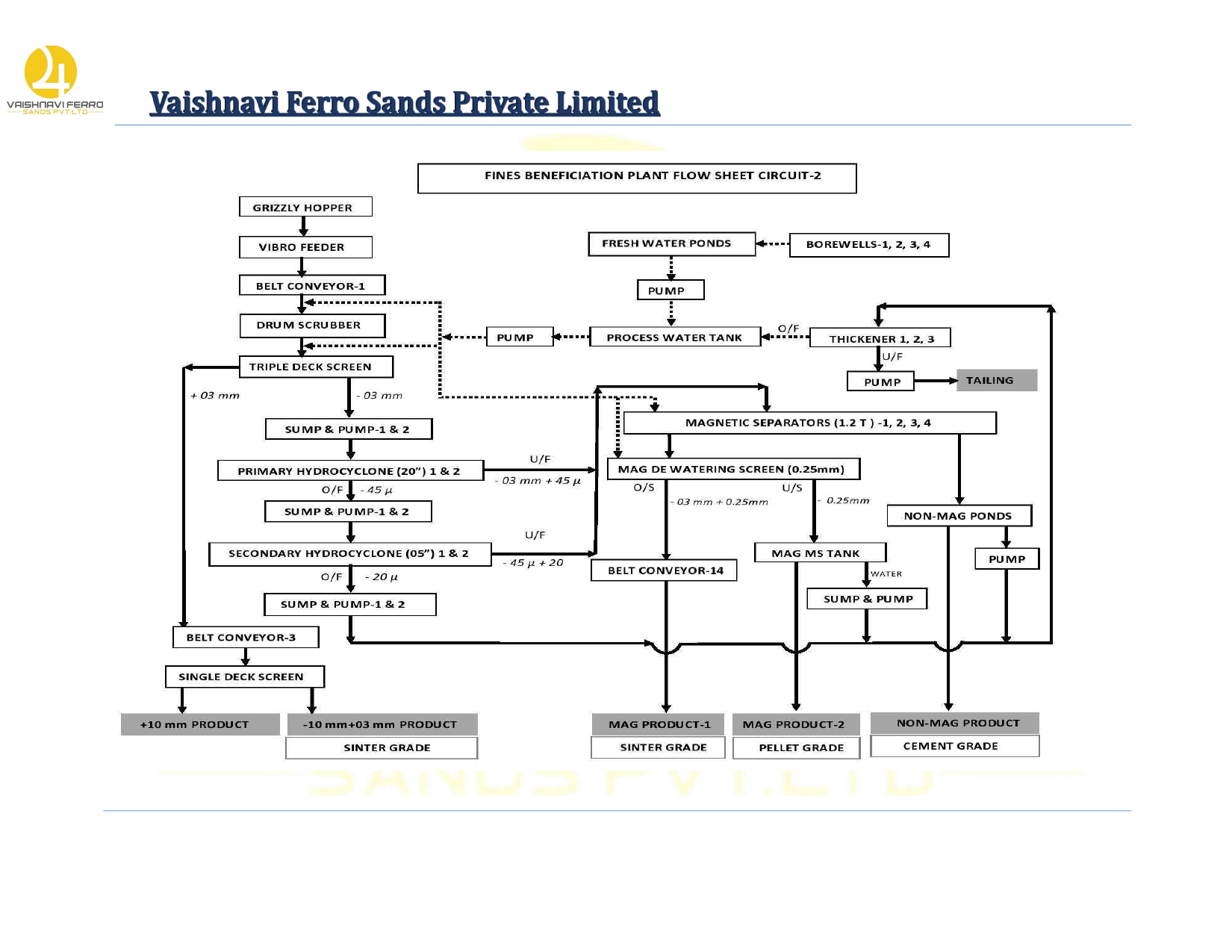
Fines Beneficiation Flow Sheet (Circuit-2)

Dedicated circuit configuration with Dewatering Screen (0.25mm) • Magnetic Tank • Closed-loop Process Water recirculating to Thickeners 1, 2, 3.

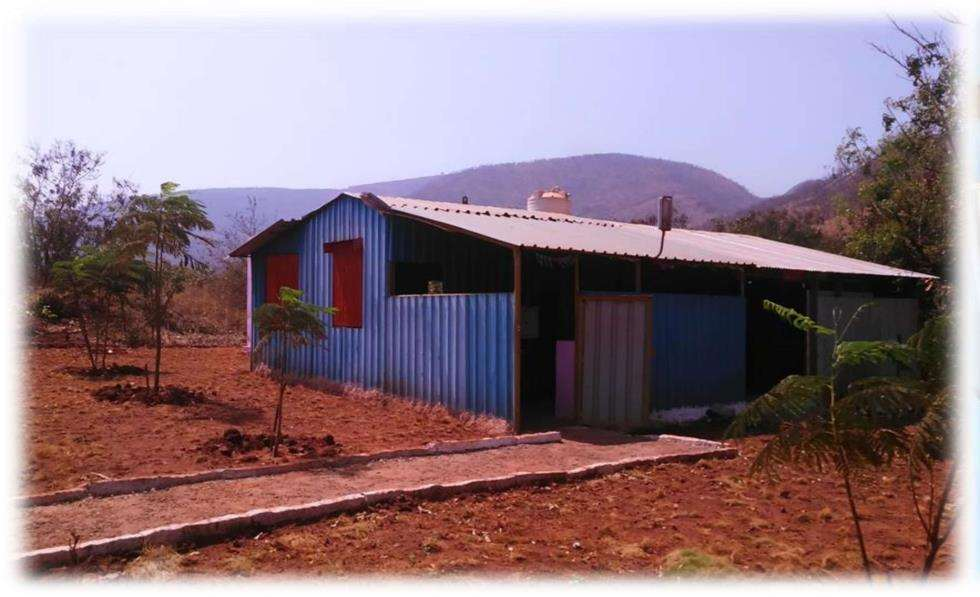
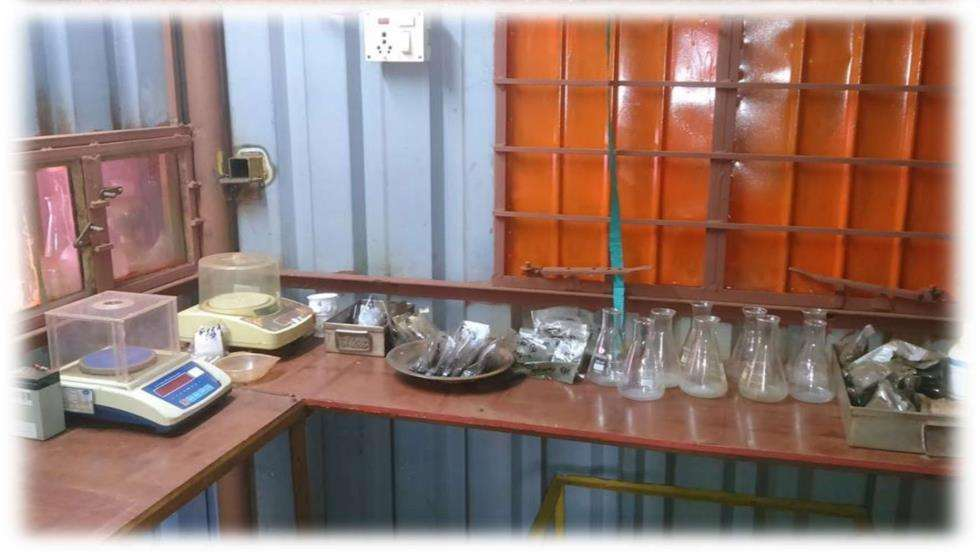
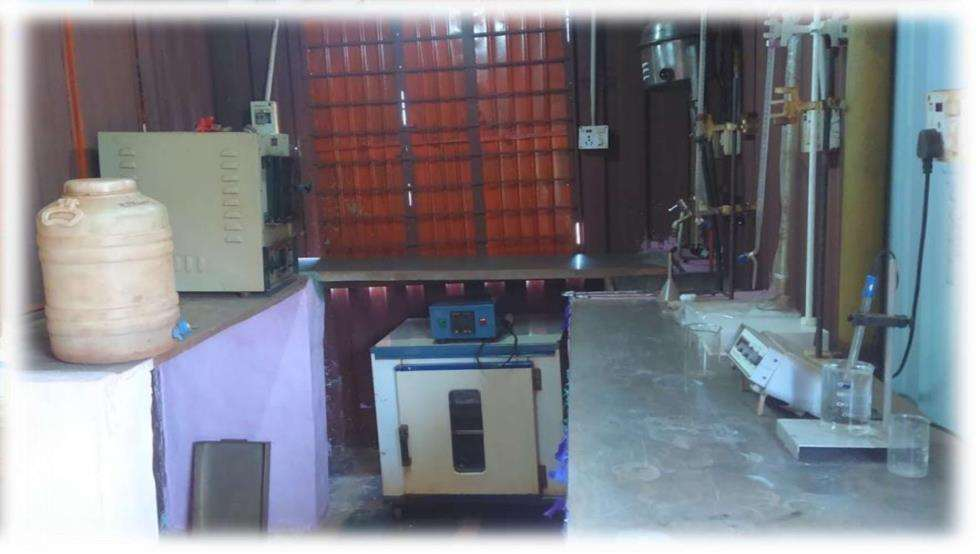
On-Site Quality Analysis Laboratory

Continuous testing of incoming Run of Mine (ROM) ores and processed output ensures zero variance from client chemistry agreements.

Rigorous Metallurgical Testing Protocols

Our dedicated on-site laboratory at Nandihalli operates around the clock. Key testing protocols include:

  • Chemical Titration & Assay: Determining total elemental Iron (% Fe [T]), Manganese (% Mn), Silica (SiO2), and Alumina (Al2O3).
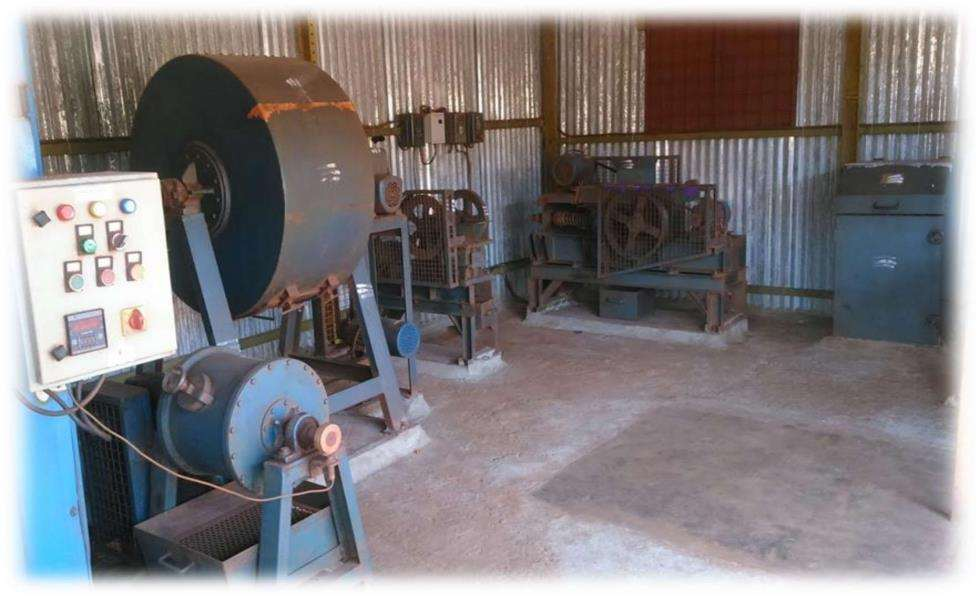
  • Tumbler & Abrasion Index (TI/AI): Standardized rotating drum tumbler test machine evaluating mechanical strength and degradation resistance for Blast Furnace burden.
  • Screen & Sieve Analysis: Precision Tyler mesh sieve shaking verifying strict lump boundaries (-40+10mm, -20+5mm).
  • Moisture & Loss on Ignition (LOI): Calibrated digital analytical balances and high-temperature lab drying ovens.